In the cool morning shade of the west hills of Portland, Linda and Rob wait eagerly at the end of the driveway for their certification visit. Linda, like many Backyard Habitat Certification Program participants, has spent many years working on this land: diligently pulling out ivy along the steep ravines, buying plants wherever she can find a deal, and nurturing these babies through their first years of life. But unlike many participants, Linda and Rob have chosen a monumental task: they are tending the sprawling common areas of their Homeowners Association.
Linda has always enjoyed the lush forested pathways that meander through the 18-acre property. About 10 years ago, she began to truly understand what plants predominated the understory and choked the seasonal streams: English laurel, English ivy, Himalayan blackberry, and traveler’s joy. As she realized how few native plants thrived there, she began planning her first restoration project. “Our first section was 850 square feet, and I thought it was an insurmountable task at the time,” she commented at her gold certification visit, 9 years later.
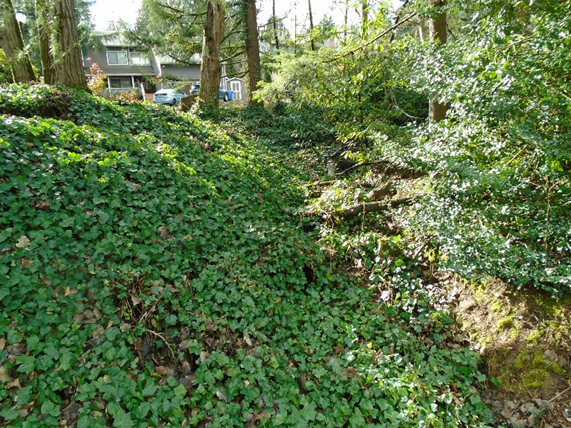
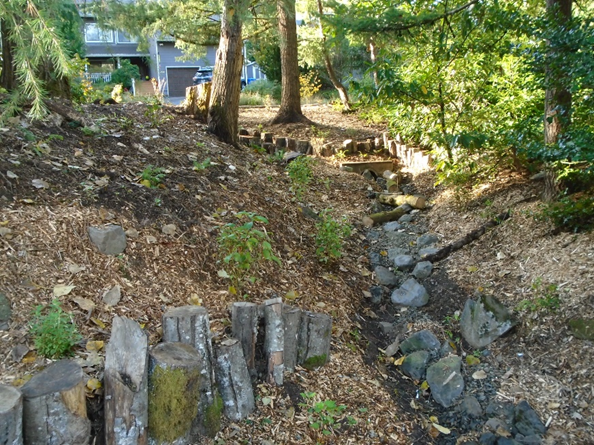
Photos: Streams through the hilly HOA were choked with ivy and blackberry. After multiple work parties, they removed the ivy and added rocks and native plants to manage erosion. Linda used logs from felled trees to create artful borders that stabilized slopes.
Now, she has enrolled a whopping 36,700 square feet in Backyard Habitat, 60% of which is fully restored to primarily native species. Rob is an official HOA employee whose main job is to maintain these special areas. Linda has coordinated multiple volunteer work parties to pull ivy and has inspired many residents to appreciate the natural areas and participate in their care. At 79 years young, she shows no sign of stopping: she has recently added two plots to her Backyard Habitat enrollment, and is well on her way to platinum certification.
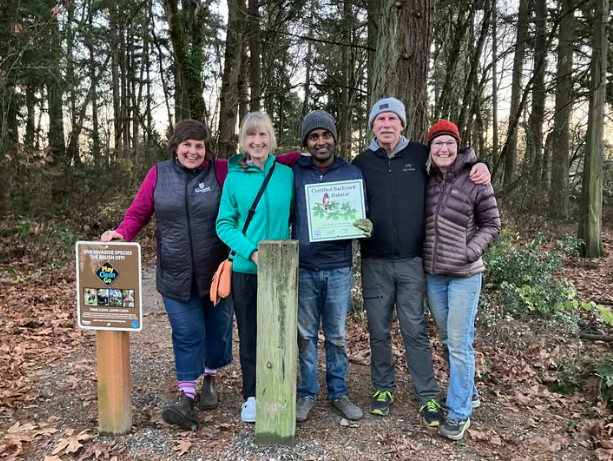
All across the four-county metro area, residents like Linda are taking it upon themselves to care for the common areas of their apartment complexes, condos, HOAs, and public rights-of-way. Over 100 HOA and apartment common spaces are enrolled as “community sites” in Backyard Habitat and are stewarded by individual residents, HOA boards, and work parties of volunteers. Recently, four exceptional participants came together for a premiere Backyard Habitat HOA presentation to share their stories, offer crucial tips for success, and brainstorm ideas to address common barriers HOAs and multi-family housing face.
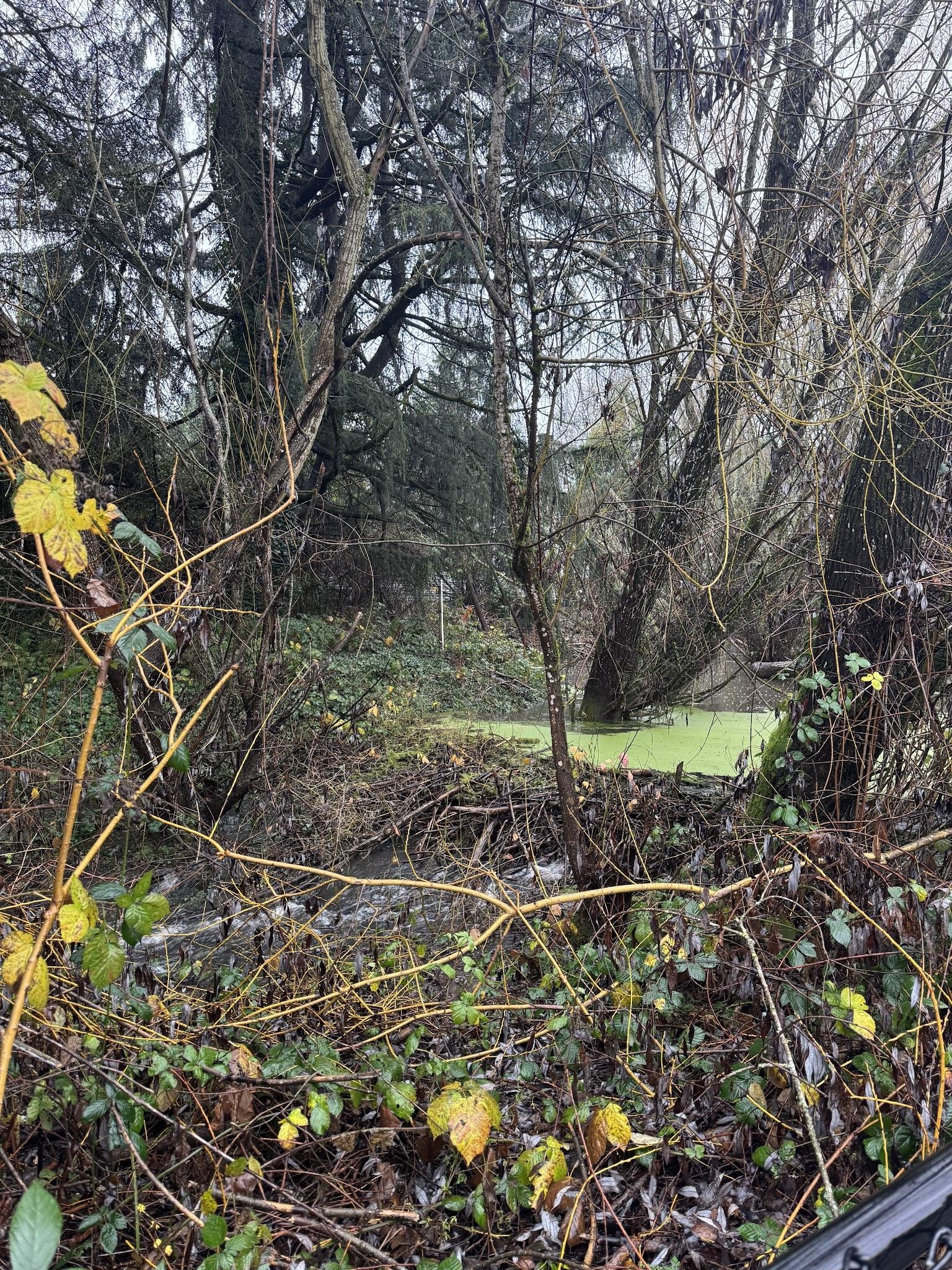
Jorge fell in love with his apartment complex’s stormwater facility after a beaver made a dam across the shallow stream and created a pond. After the apartment’s first failed attempt to remove the dam, only to have the beaver return and rebuild, Jorge began talking to the board and local watershed organizations to plan a strategy that allows humans and beavers to live together. “I was surprised by how much time needs to be spent on relationship building,” Jorge reflected. “It took years to address the concerns of the HOA, meet the neighbors, and build trust and buy-in.” His diligence paid off: his HOA now fully supports the project, and his partnership with his local watershed organization opened doors to local grant funding, volunteer coordination, and access to tools and wholesale nurseries. His team has plans for their first major installment of wetland plants to stabilize the banks in the coming months.
Kathleen is a member of her HOA board, and she saw a major eyesore in the middle of her community: a wall of eight-foot-tall blackberry choking out a seasonal stream. The HOA had limited funding and needed a quick solution, so they hired landscapers to spray and cut back the blackberry. It was effective, but it left bare soil and little plant life. Their first step was to host a large work party to spread many yards of arborist chips throughout the area. The HOA turned to Backyard Habitat for ideas on filling the space with something residents would enjoy, that would be low maintenance, and that would benefit local wildlife. Their Backyard Habitat visit gave them many ideas and resources for building up plant life and providing habitat features and stormwater protection for their seasonal stream.
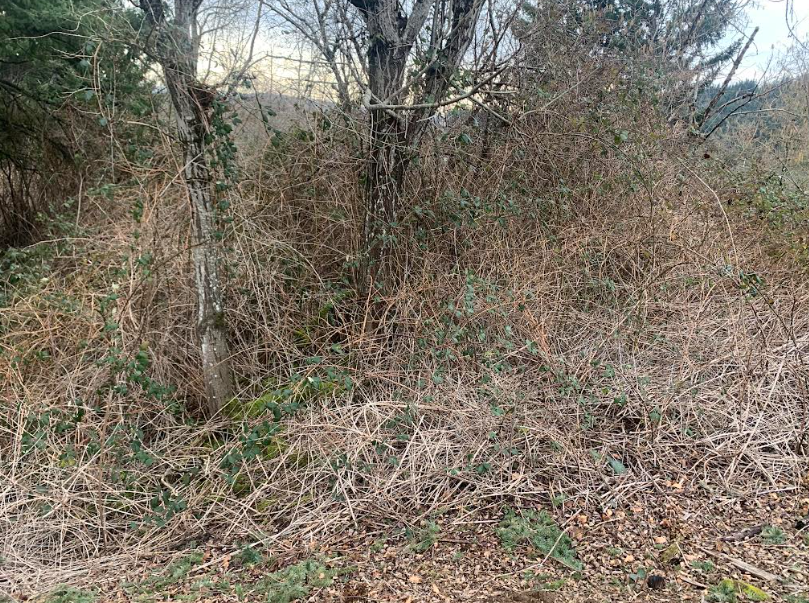
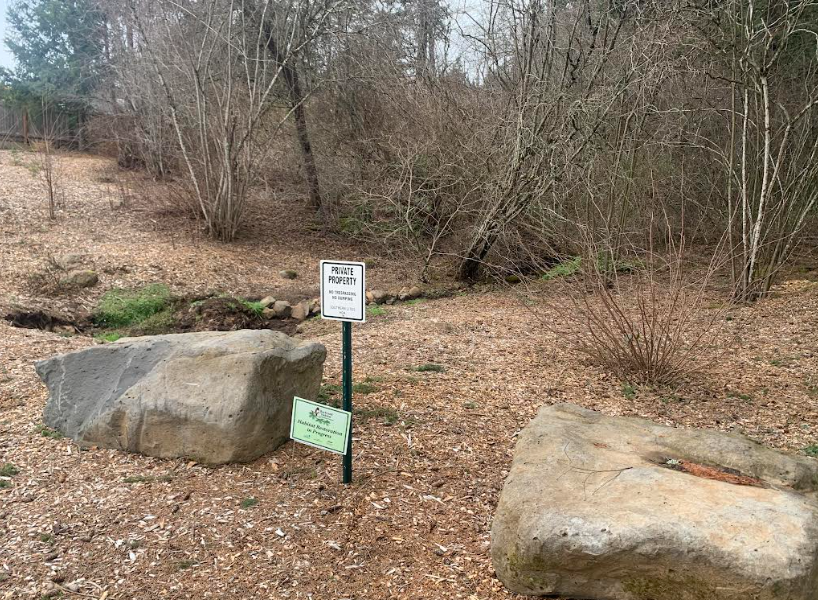
Photos: Before work, an eight-foot wall of blackberry filled this HOA common area. After removal, wood chips thickly cover the soil to rebuild health and manage erosion.
Like many HOAs, Kathleen’s ran into the realities of tight budgets, few hands, and overwhelm. Luckily, she has Backyard Habitat and local water utilities with funding opportunities to turn to. Enrolling in the Backyard Habitat community site program can help with goal setting, improve a group’s access to these funding resources, and open opportunities to partner with watershed alliances or soil & water conservation districts.
Residents of HOAs and apartments also play a crucial role in long-term land stewardship. Residents can enroll their own yards in the Backyard Habitat program. They can be the voice of change for HOAs that may be open to wildlife-friendly landscaping, both through advocacy and through joining the HOA board. Backyard Habitat has compiled a robust toolkit for those hoping to inspire policy change within their HOAs. Consider sharing the Backyard Habitat HOA fact sheet, which outlines the financial and environmental benefits of our program. If board members are curious about changing their practices, the Enhancing Biodiversity In Private Property(1) toolkit helps HOAs audit their current policies, suggests simple changes that allow for wildlife-friendly gardening practices, and clearly explains the benefits of doing so. If residents need further guidance for talking to HOA boards, the Guide for Guides(2) suggests some best practices for navigating the conversation.
Inspired to expand your impact in your area? Do you have a public area or residential property you would like to steward? Enroll your site in the Backyard Habitat Certification Program on our enrollment page, and we will be happy to tailor our site visit and resources to your unique situation!
Footnotes