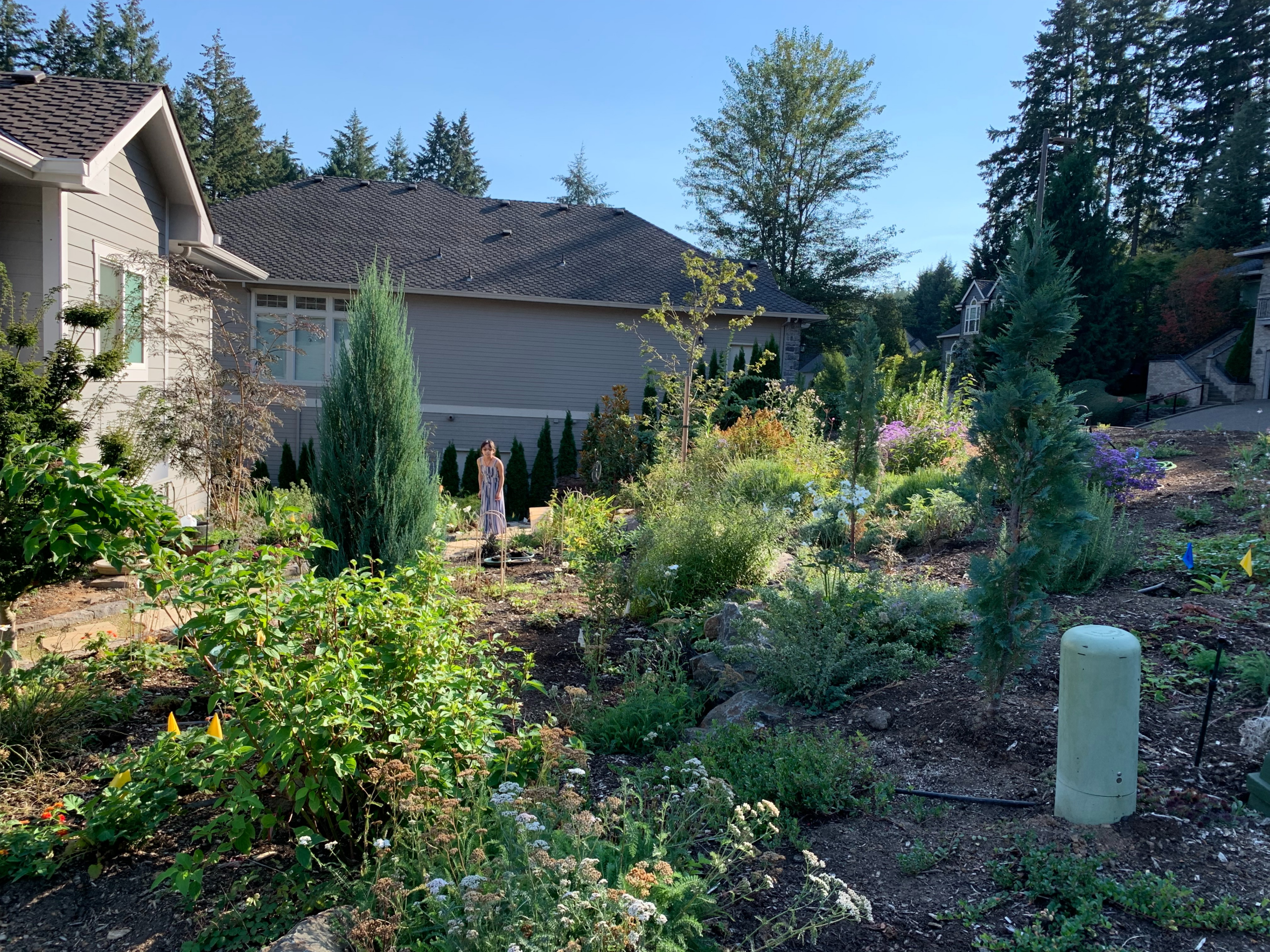
Site Information: Located in the Sexton Mt. in Beaverton, with full sun, part sun, shade, dry, slope.
What inspired you to enroll in the Backyard Habitat Certification Program?
When we moved to Beaverton, there was nothing but clay and a few shrubs. But when we started planting with natives, the birds, snakes, etc., arrived! Nothing worse than a quiet garden, and we live on a hill, so no grass (thank goodness). The gophers, moles, deer, and snakes visit. I don’t chase dogs out of my yard because their pee is a great nitrogen source, and deer poop is free fertilizer. While the humans are at work, I enjoy visits from my 0-4-legged friends. What could be more lovely?
How would you describe your habitat?
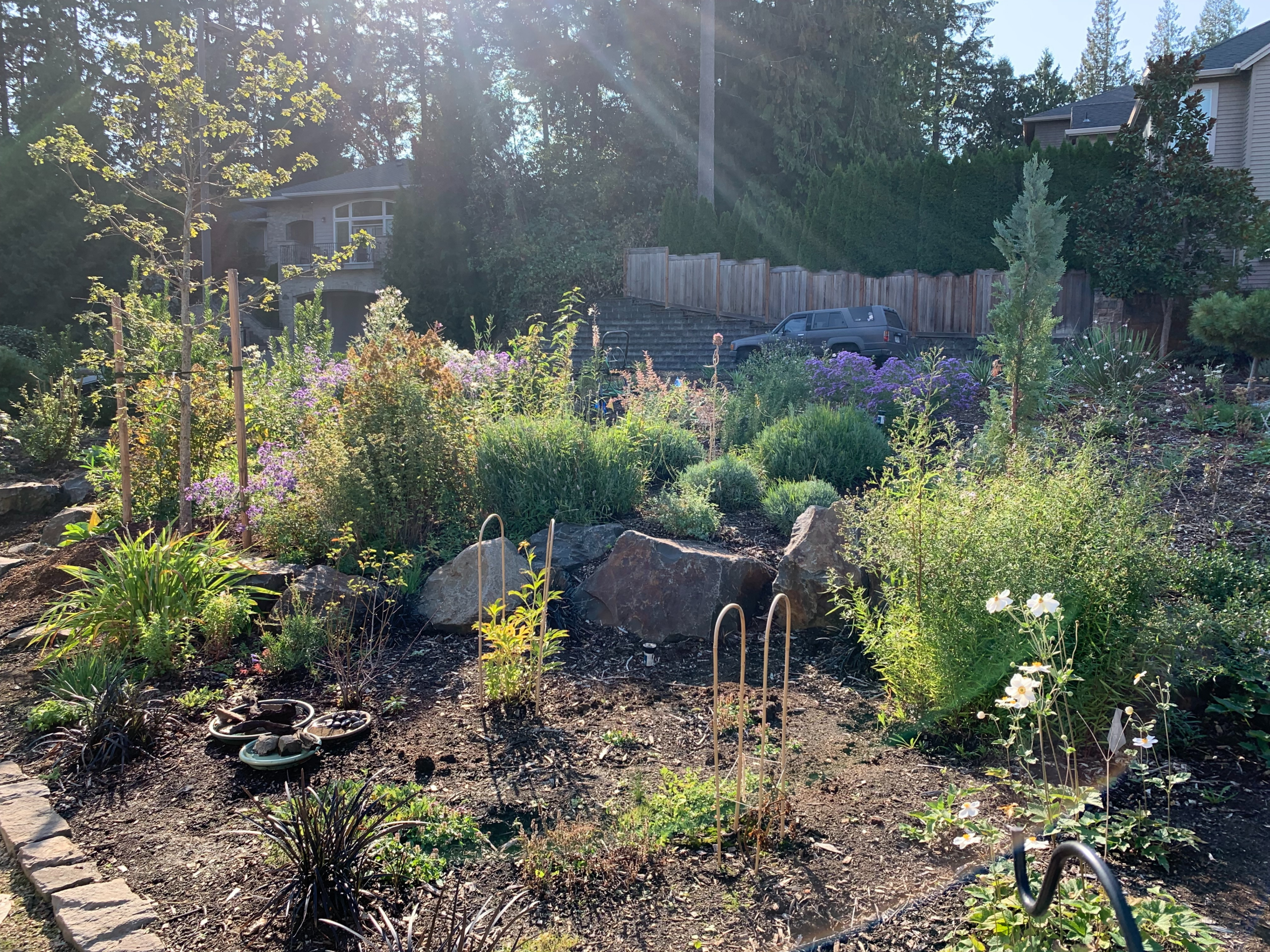
Wildlife, natural gardening.
What are your top three favorite native plants, and why do you love them?
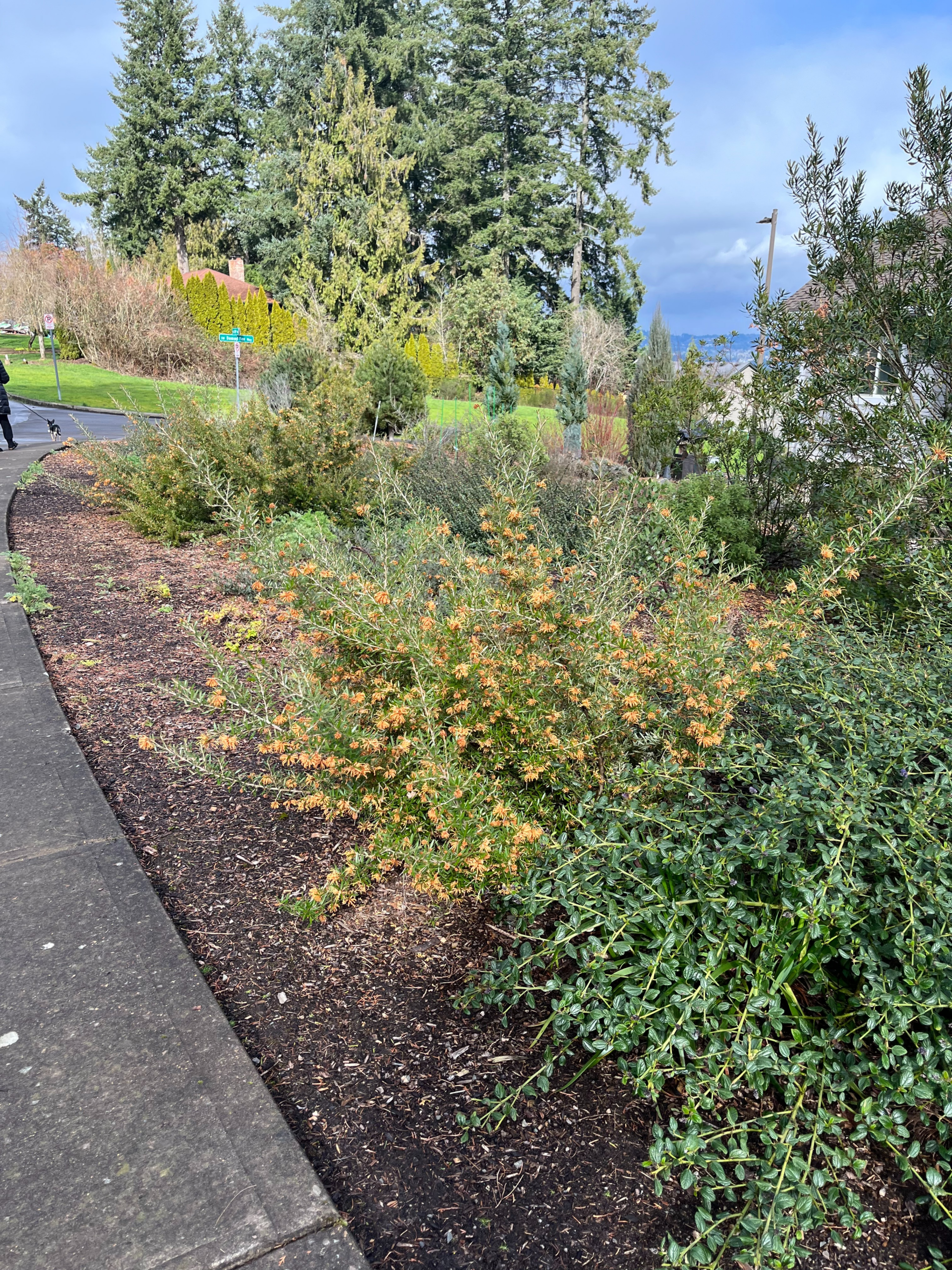
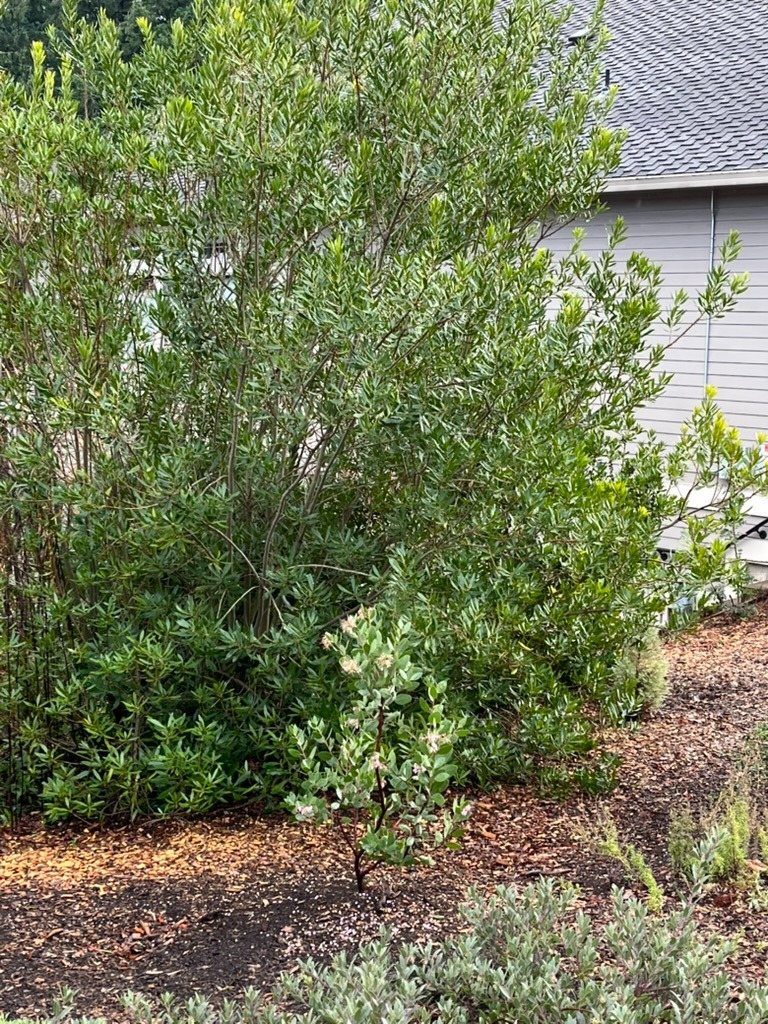
- Pacific Myrtle – evergreen/food and protection for birds all year round.
- Arctostaphylos – water-adverse plants provide insects, bugs, and birds with food and cover.
- Native irises – they’re beautiful and care-free (on my part).
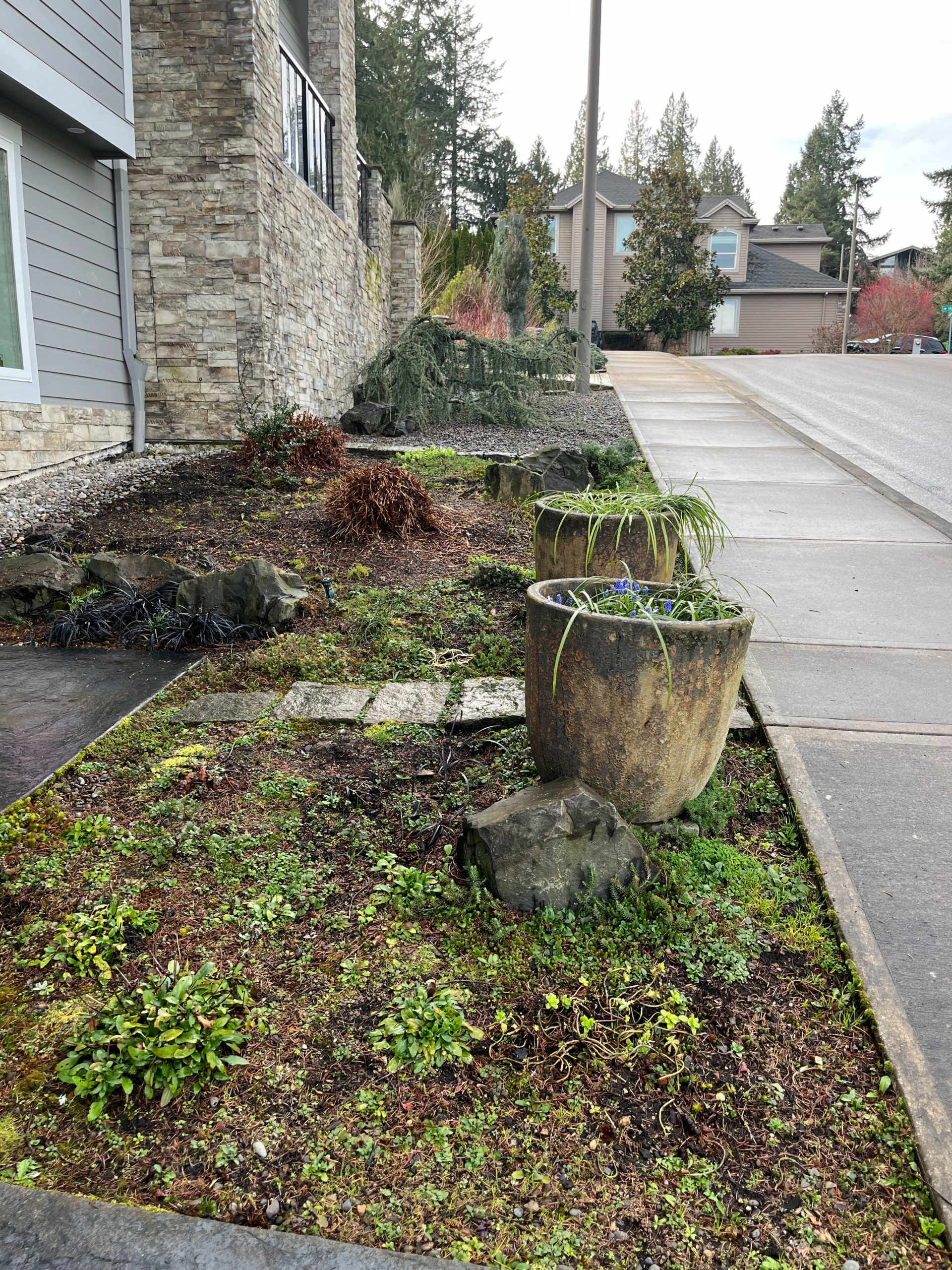
What changes have you observed as a result of creating habitat?
As the trees grow taller, shade cools our space. Planting needs have to be reconsidered. More bumbles and birds, including predatory birds, have visited. Less weeding.
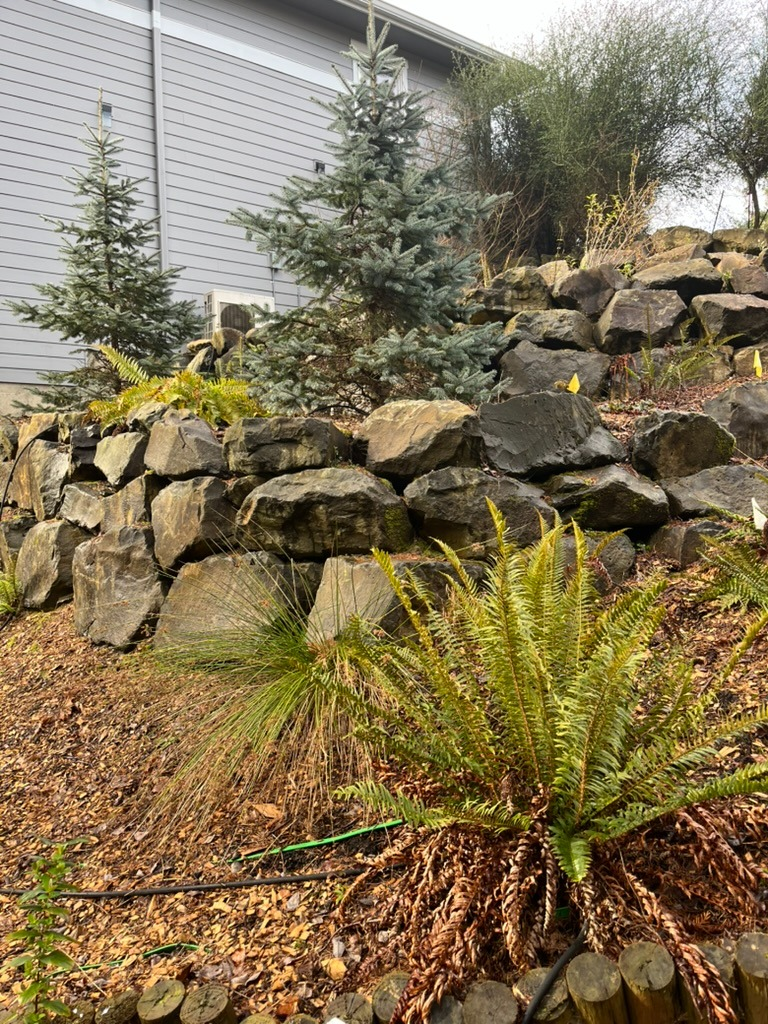
What were the two most significant challenges you encountered while creating habitat, and how did you address them?
The soil needed to be changed. We had clay and used a LOT of wood chips. We hired a reputable native landscaper to help remove invasive weeds and to educate us on soil and plants we had never considered.
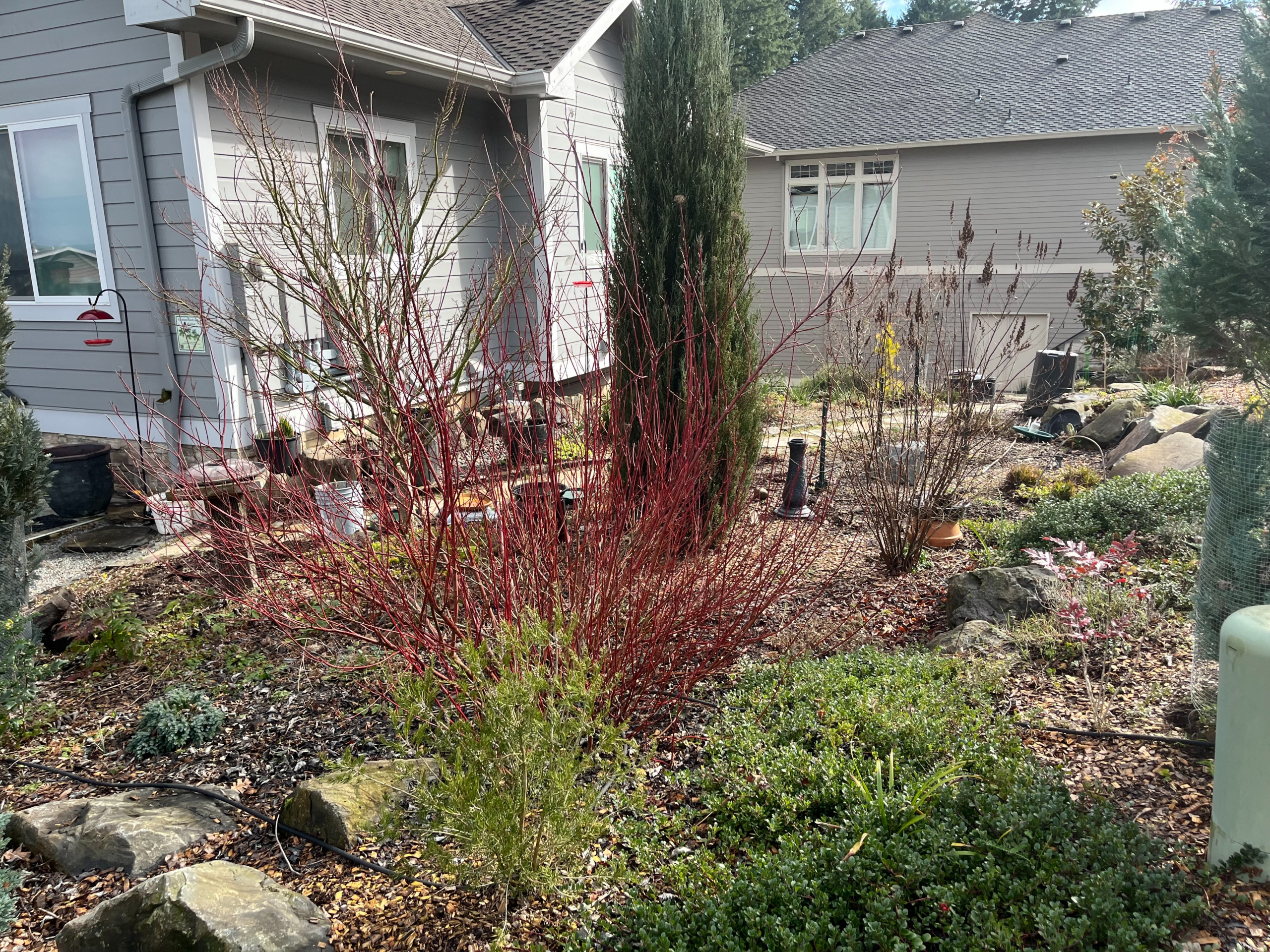
What resources did you find especially helpful?
BackYard Habit, Tualitan Water Soil and Water Conservation District, XeraPlants.com, Perelandra.LTD, SparrowHawk Native Plants, Oregon State University Extension Service, Bureau of Planning and Sustainability (city of Portland) Books: Bonsai, The Guide to Pruning, Practical Permaculture, Gardening for the Birds, Mason Bees, Understanding Roots, Landscaping for Wildlife in the PNW, Ecology of the Planted Aquarium, Enclyopedia of NW Native Plants
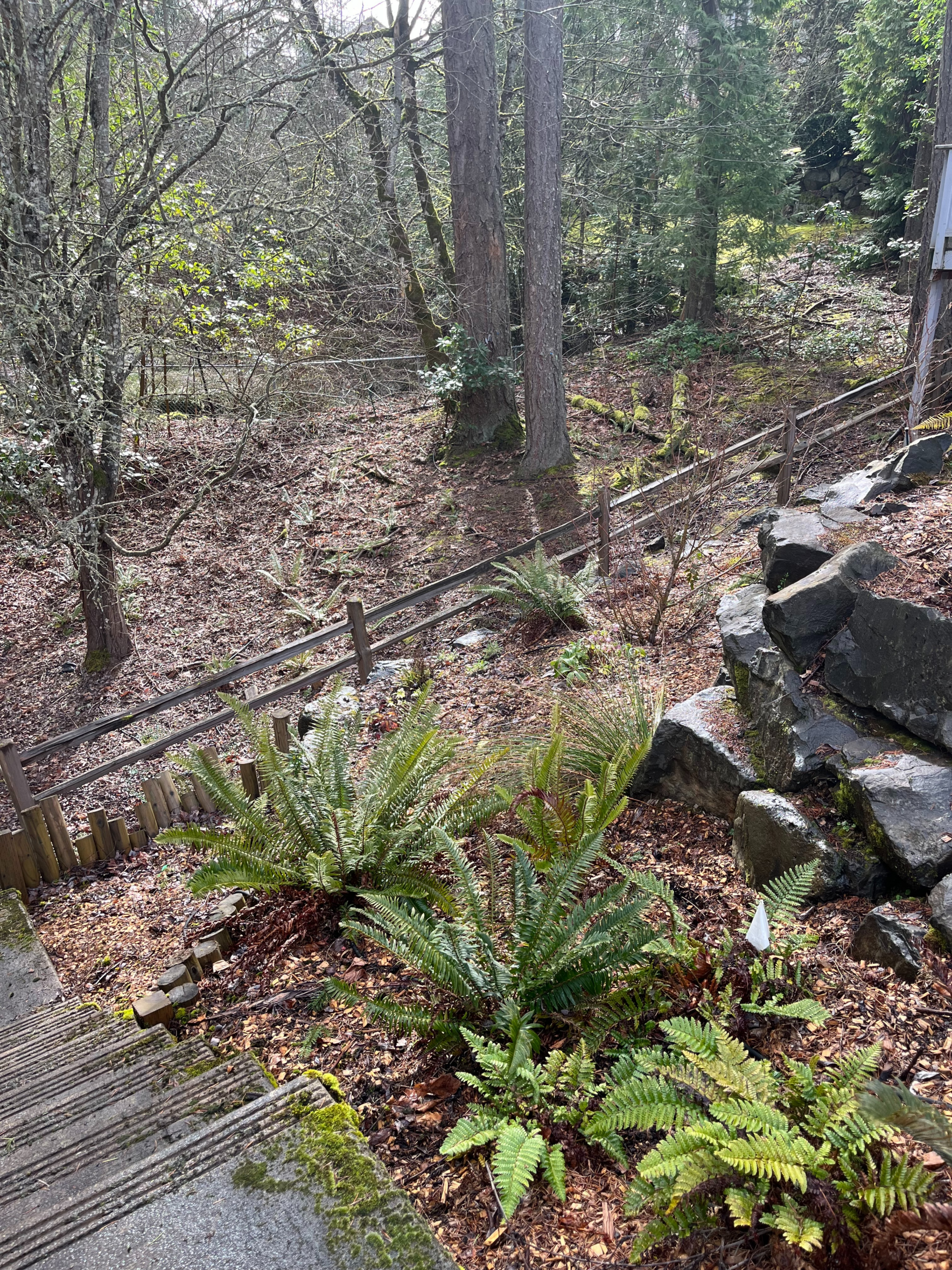
How do you enjoy your Backyard Habitat throughout the different seasons? What are its highlights in each season?
Spring and fall are my favorite seasons. The environment pops with color and buzzes. In summer, the trees keep us cool, and winter is still a challenge—what to plant to keep it green all year.
What part of your backyard habitat are you most proud of?
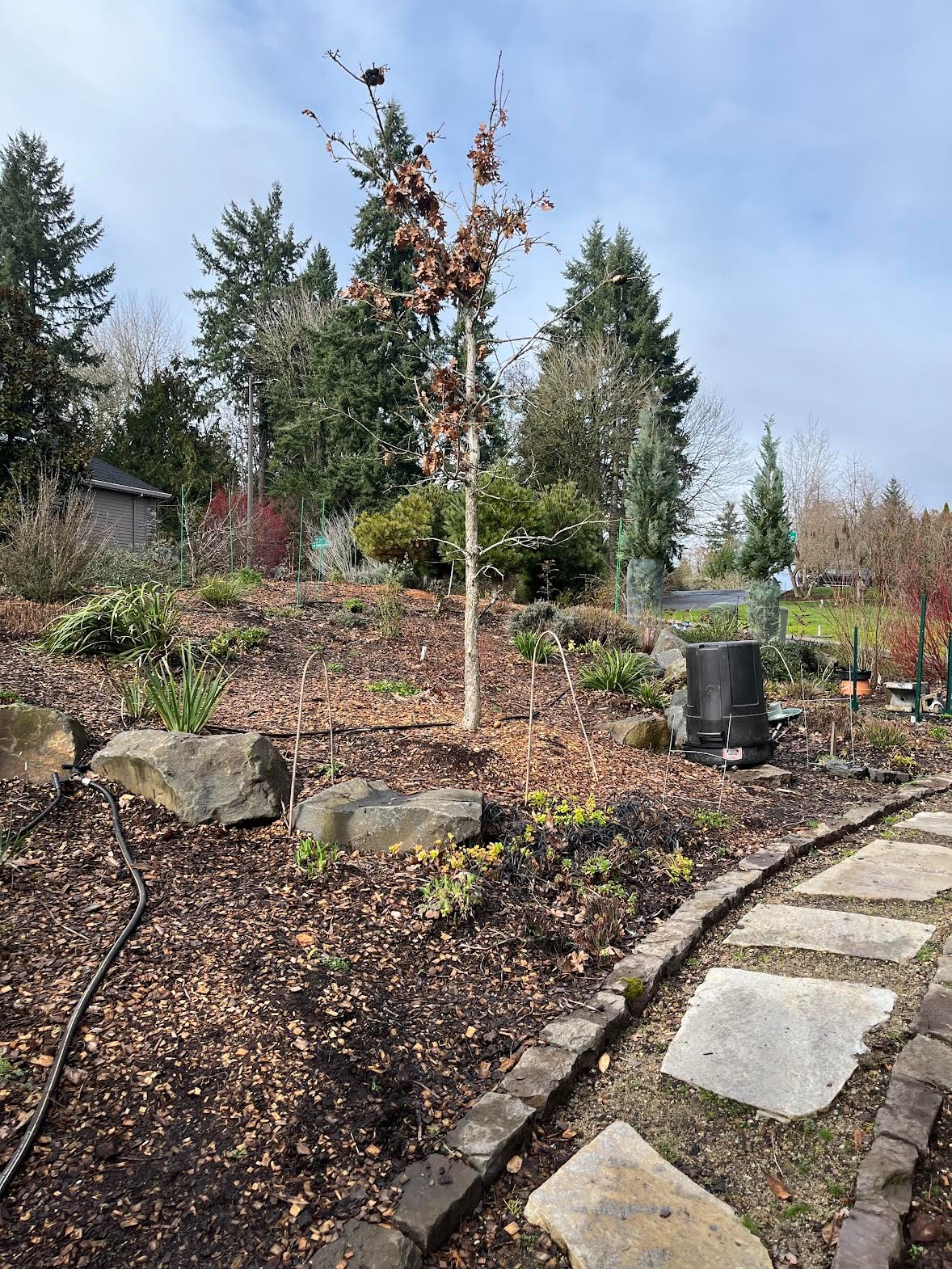
The fact that it’s pesticide-free and that my baby oak will one day cover the entire area.
Is there anything else you’d like to add about your journey?
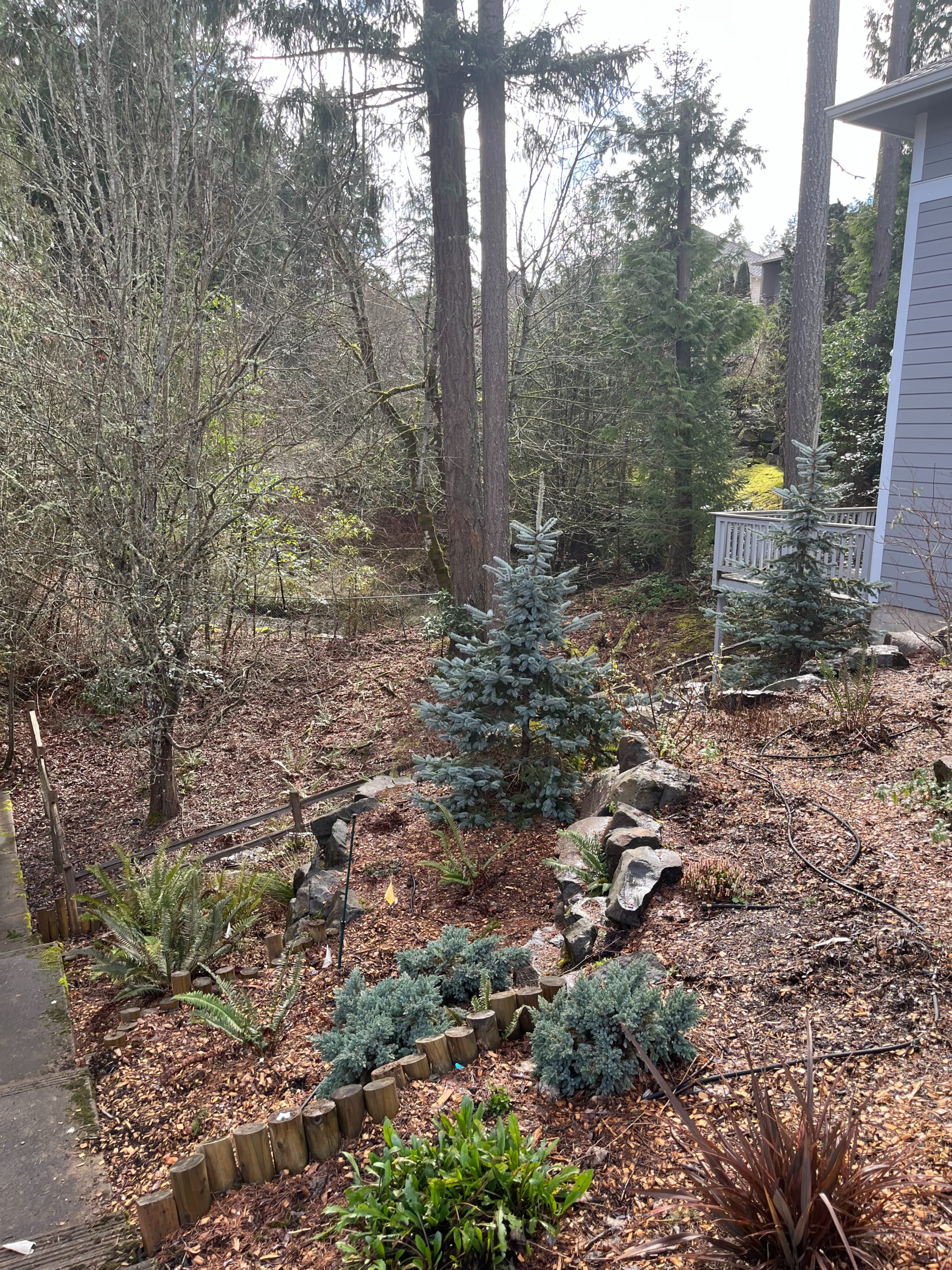
It’s a bit of work at first, but the benefits and ease of gardening are priceless.
What is one piece of advice you would give new program participants?
Do it: read, study, ask, see, observe, learn…